


YOUR HAIR. OUR EXPERTISE. YOUR TRANSFORMATION. iGraft Global Hair & Skin Advanced Hair Restoration Natural-Looking Results YOUR HAIR. OUR EXPERTISE. YOUR TRANSFORMATION. iGraft Global Hair & Skin Advanced Hair Restoration Natural-Looking Results

Male Hair Transplant

Restore Your Hair. Restore Your Confidence.

Hair loss is a gradual process for many men. It may begin with a slightly receding hairline, thinning at the front, a widening parting or a small bald spot around the crown. In the beginning, these changes may seem minor. You may simply notice more hair on your pillow, in the shower or under bright light. But as hair loss progresses, the difference can become more visible and can affect the way you feel about your appearance.
For many men, hair is closely connected to how they see themselves. A receding hairline can change the shape of the face, while thinning around the crown can make the scalp more noticeable. When hair loss continues over time, styling the hair may become difficult and hairstyles that once worked may no longer provide the same coverage.
At iGraft, we understand that deciding to have a hair transplant is a personal decision. You may have spent months or even years trying different hair-loss products, changing your hairstyle or looking for ways to hide thinning areas. A hair transplant can be an option when hair has been permanently lost and you have suitable donor hair available for transplantation.

Posted on Google Google
Abhishek Shinde profile picture
Abhishek Shinde
Google star 1Google star 2Google star 3Google star 4Google star 5Trustindex verifies that the original source of the review is Google.
If you are looking for top 5 hair transplant clinic in pune then this is definitely one of them. The results speak for themselves and the process is very systematic from start to finish. Happy with the growth.
Posted on Google Google
Ram Jadhav profile picture
Ram Jadhav
Google star 1Google star 2Google star 3Google star 4Google star 5Trustindex verifies that the original source of the review is Google.
I was looking for a hair specialist near me and found this place. The consultation was not rushed and they explained the whole dfi hair transplant process. The results are very encouraging for my future look.
Posted on Google Google
Arman Anshari profile picture
Arman Anshari
Google star 1Google star 2Google star 3Google star 4Google star 5Trustindex verifies that the original source of the review is Google.
Dr shagufta and staff is very good I visited igraft for my hair transplant in pune and the process was very smooth. The doctors explained the dfi procedure clearly and the results are looking natural after a few months. Really satisfied with the overall experience at this clinic.
Posted on Google Google
Jaynath Yadav profile picture
Jaynath Yadav
Google star 1Google star 2Google star 3Google star 4Google star 5Trustindex verifies that the original source of the review is Google.
Best hair transplant clinic in pune for anyone looking for quality results. The staff is polite and they follow up regularly after the procedure to check on progress. The post surgery care instructions were very helpful.
Posted on Google Google
Prathmesh Salunke profile picture
Prathmesh Salunke
Google star 1Google star 2Google star 3Google star 4Google star 5Trustindex verifies that the original source of the review is Google.
Done my consultation with the professional doctor here , felt so good that they understood my hair pattern and suggested me what's good for me . Looking forward to get best results.
Posted on Google Google
ankit gala profile picture
ankit gala
Google star 1Google star 2Google star 3Google star 4Google star 5Trustindex verifies that the original source of the review is Google.
"I had a wonderful experience with Dr. Shagufta for my hair treatment. She took the time to explain everything thoroughly and made me feel completely comfortable with the procedure. Highly recommended!"
Posted on Google Google
Kishor Pawar profile picture
Kishor Pawar
Google star 1Google star 2Google star 3Google star 4Google star 5Trustindex verifies that the original source of the review is Google.
Consultation is good
Posted on Google Google
Gaurav Murkute profile picture
Gaurav Murkute
Google star 1Google star 2Google star 3Google star 4Google star 5Trustindex verifies that the original source of the review is Google.
Great experience at the clinic. Dr. Shagufta gave a simple and easy-to-understand explanation of my hair concerns. She clearly walked me through the treatments and procedures before starting.
Posted on Google Google
Mujahid Shaikh profile picture
Mujahid Shaikh
Google star 1Google star 2Google star 3Google star 4Google star 5Trustindex verifies that the original source of the review is Google.
Nice. Well experienced staff and one of the best DR Shagufta

A Hair Transplant Planned Around You

A male hair transplant isn't simply about taking hair from one part of your scalp and placing it somewhere else. The planning behind the procedure plays an important role in how natural the result looks.
Your hairline, facial proportions, existing hair, donor density and pattern of hair loss all need to be considered before treatment. The aim is to create a hairline that looks natural rather than one that appears artificially low or straight. At the same time, the available donor hair needs to be managed carefully because it is a limited resource.
At iGraft, we take the time to understand your current hair-loss pattern and what you want to achieve. Your treatment plan is developed according to your individual needs rather than following the same approach for every patient.
Whether you're concerned about a receding hairline, thinning at the front, crown hair loss or more advanced male pattern baldness, the first step is understanding what can realistically be achieved with your available donor hair.

Hair Restoration That Looks Like Your Own Hair

The goal of a successful hair transplant is not simply to make the scalp look fuller. It is to restore hair in a way that fits naturally with the hair you already have. Small details can make a significant difference. The angle at which a follicle is placed, the direction in which it grows, the spacing between grafts and the transition from the hairline to the existing hair all contribute to the final appearance. This is particularly important when restoring the front of the scalp. The hairline is visible every day, so it needs to look natural from different angles and under different lighting. A well-planned hairline should also take your age and potential future hair loss into consideration. Our approach to male hair restoration focuses on creating a balanced result rather than simply chasing maximum graft numbers or density.

Our Patients Speak

Who Is Male Hair Transplant For?

Male hair transplantation is commonly considered by men experiencing permanent hair loss caused by male pattern baldness, also known as androgenetic alopecia. This can affect men in their 20s, 30s, 40s and beyond, although the pattern and progression of hair loss can be very different from one person to another.

Some men mainly notice their temples moving backwards, while others experience thinning across the frontal scalp or crown. In more advanced cases, hair loss can extend across several areas of the scalp.

Not every type of hair loss requires a transplant, and not every man is an ideal candidate. The condition of your scalp, the stability of your hair loss, the quality and density of your donor hair and the amount of coverage you require all need to be considered.

A proper consultation can help determine whether hair transplantation is suitable for you and what kind of result may realistically be possible.

Why the Right Hairline Matters?

Your hairline has a major influence on the overall appearance of your face. When it begins to recede, the forehead may appear larger and the proportions of the face can change.

During a male hair transplant, the goal should not be to recreate the hairline you had as a teenager. A mature hairline that suits your age and facial structure can often look much more natural and can also help preserve donor hair for future needs.

The hairline should have a natural shape and transition gradually into the existing hair. Individual follicles can then be positioned according to the natural direction and characteristics of your hair.

This attention to detail is one of the reasons hairline planning is such an important part of the iGraft treatment process.

What About Crown Hair Loss?

The crown is another common area affected by male pattern baldness. Unlike the front of the scalp, the crown has a natural whorl where the hair changes direction as it grows.

Restoring this area therefore requires careful planning. Simply placing grafts across the crown without considering the natural growth pattern can affect the appearance of the result.

The amount of donor hair available also matters. Depending on your level of hair loss, it may be more beneficial to prioritise certain areas rather than trying to achieve maximum density everywhere.

At iGraft, the treatment plan considers the overall appearance of your scalp and how your available donor hair can be used most effectively.

Your Hair Loss Today Is Not the Whole Story

One of the most important things to consider before a hair transplant is what may happen to your existing hair in the future.

A transplant restores hair to areas where follicles have been lost, but it does not necessarily stop the progression of male pattern baldness in the surrounding untreated hair. If your existing hair continues to thin, the way your transplanted and non-transplanted hair looks together can change.

That’s why long-term thinking is important.

At iGraft, treatment planning takes your current hair-loss pattern and future possibilities into consideration. The objective is to make sensible use of your donor hair today while keeping your overall hair restoration plan in mind.

FUE and DFI Hair Transplant Options

Modern hair transplantation offers different approaches to extracting and placing individual hair follicles. At iGraft, FUE and DFI can be considered depending on the patient’s individual requirements.

FUE, or Follicular Unit Extraction, involves extracting individual follicular units from the donor area before placing them into areas affected by hair loss. It can be used for a range of male hair-loss concerns, including receding hairlines, frontal thinning and crown restoration.

DFI focuses on the precise placement of individual hair follicles into the recipient area. Attention is given to the direction, angle and distribution of the follicles so they can blend naturally with the surrounding hair.

The right technique isn’t determined simply by choosing the newest or most popular option. Your hair-loss pattern, donor area, treatment goals and individual suitability should guide the decision.

Start With an Honest Assessment

If you’re considering a hair transplant for men, you don’t need to make a decision based on a generic graft number or a photograph on the internet.

The first step is to understand your own hair loss.

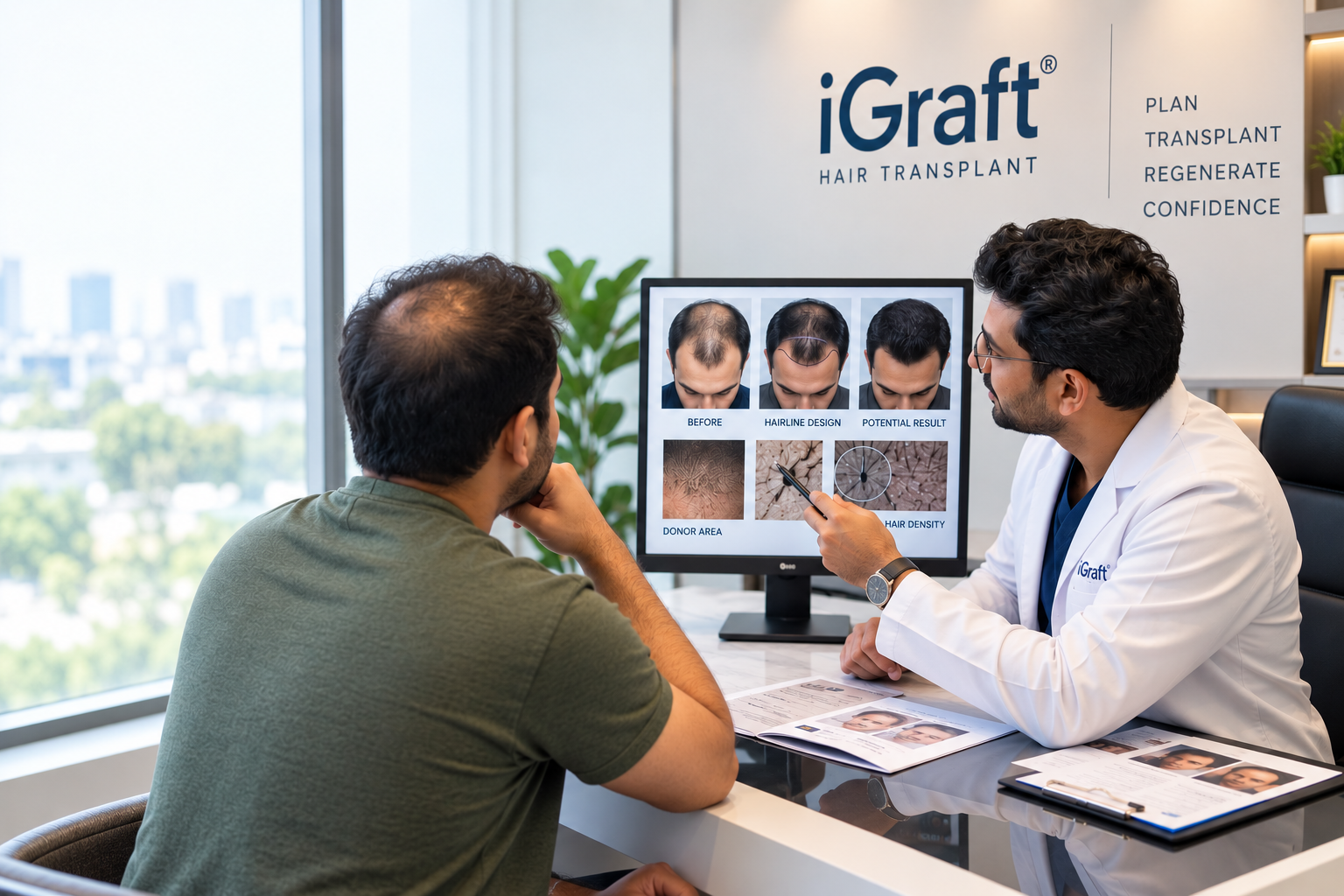
At iGraft, your hair and donor area can be assessed to determine the extent of your hair loss, the areas that may benefit from transplantation and the options available to you. You can then have a clearer understanding of what the treatment involves, how many grafts may be required and what kind of result may realistically be achievable.

A hair transplant is a long-term decision. Taking the time to understand your options before proceeding can help you make a more informed choice.Talk to the iGraft team about your hair loss and find out whether a male hair transplant could be suitable for you.

Find Your Hair Loss Stage?

Understand Your Hair Loss. Know Your Next Step.

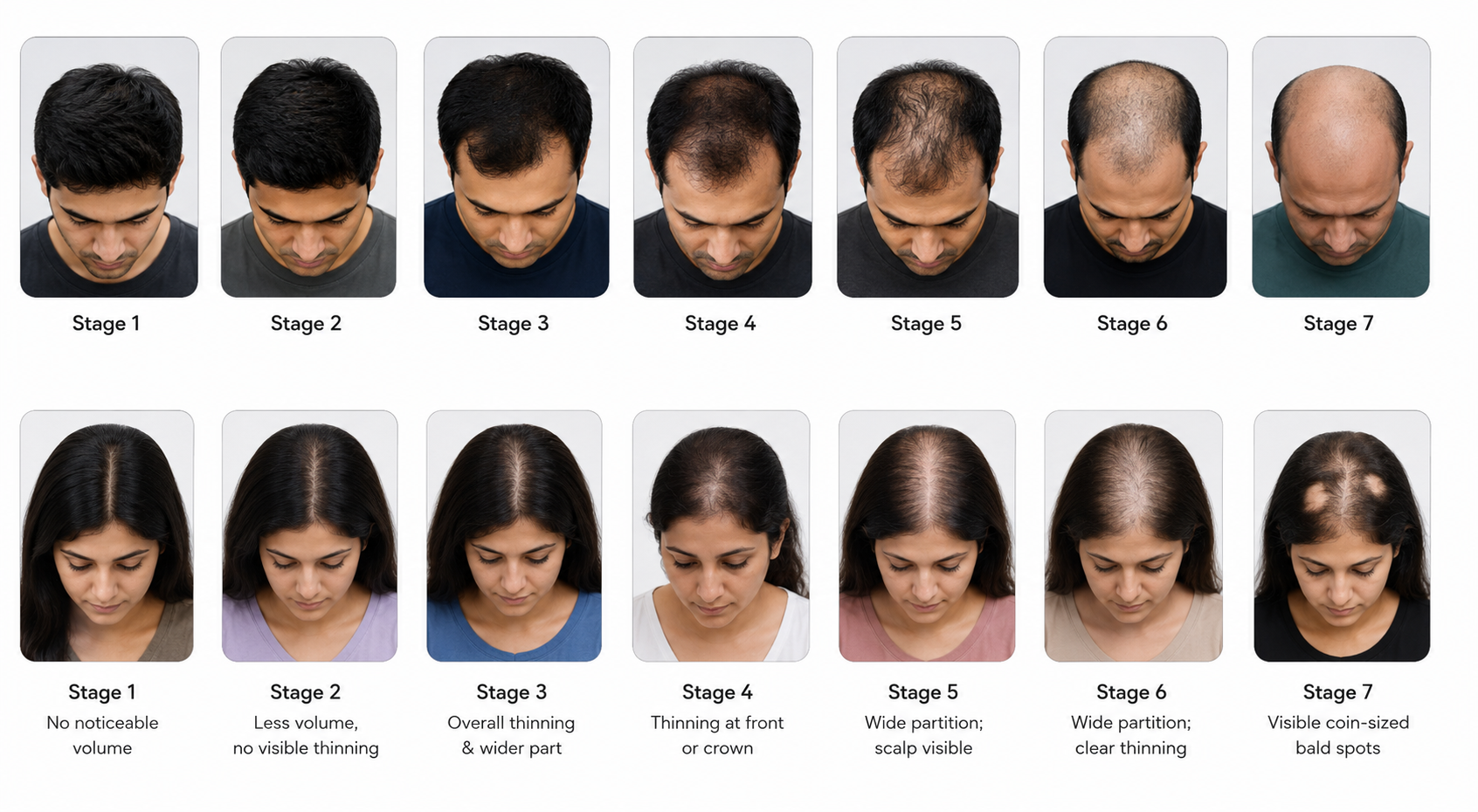
Not sure how advanced your hair loss is? Find your current hair loss stage with our quick assessment and get a clearer understanding of your hair restoration options. Hair loss can progress differently from person to person. Understanding your hairline, crown coverage, overall density, and pattern of hair loss can help you take the right next step at the right time.

Which Stage Are You In?

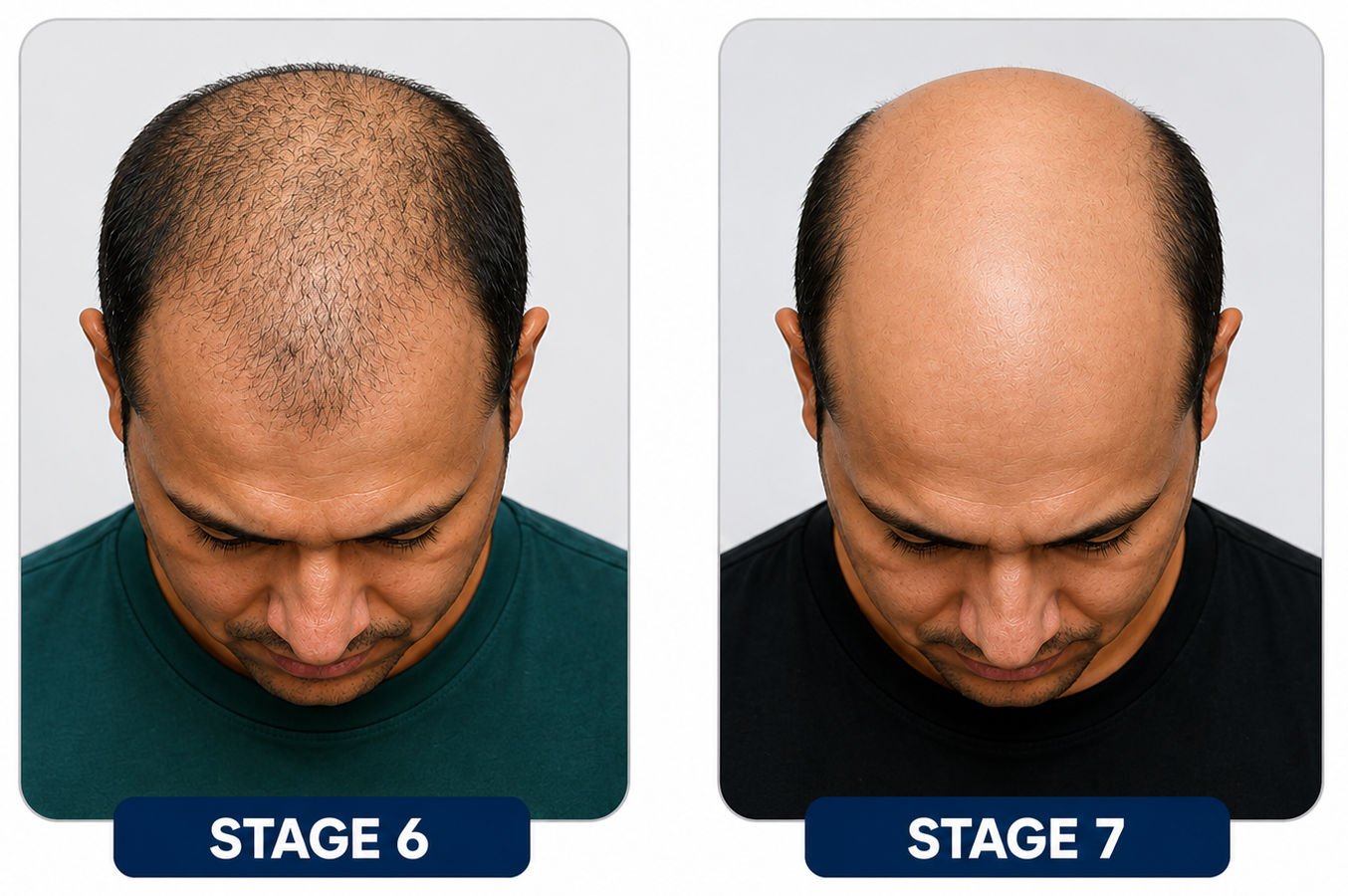
Stage 1 shows early signs of hairline recession with minimal hair loss. Stage 2 involves mild hairline recession, especially around the temples. Stage 3 shows noticeable hairline recession and visible thinning. Stage 4 is characterized by advanced hairline recession with reduced hair density on the scalp. Stage 5 involves significant hair loss affecting both the hairline and crown area. Stage 6 indicates extensive hair loss across the top of the scalp with limited remaining hair density. Stage 7 represents advanced hair loss with very limited hair coverage across the top of the scalp.

Take the 2-Minute Hair Assessment

Answer a few simple questions about your hair loss, history, and goals. Your responses help us understand your situation before recommending the next step.


Advanced Hair Transplant Techniques at iGraft

Discover advanced hair transplant techniques in India designed around your hair loss pattern, donor area, hairline goals, and desired results. At iGraft, our experienced medical team uses modern FUE, Active FUE and DFI hair transplant techniques with personalized treatment planning.

FUE Hair Transplant in India

Follicular Unit Extraction (FUE) is a minimally invasive hair transplant technique that involves extracting individual follicular units from the donor area and carefully implanting them into areas affected by hair loss. At iGraft, FUE hair transplantation focuses on natural-looking hairline design, appropriate graft placement, and balanced hair density.

Our FUE hair transplant in India is planned according to your existing hair, donor capacity, hair loss pattern, and restoration goals.

Key Benefits:-

  • Individual follicular unit extraction
  • Natural-looking hairline planning
  • Personalized graft placement
  • Minimal visible scarring
  • Suitable for different patterns of hair loss

Active FUE Hair Transplant for Advanced Restoration

Active FUE is an advanced approach to hair transplantation that combines precise follicular extraction with carefully planned implantation. The technique is designed for patients looking for comprehensive hair restoration with attention to hairline design, graft distribution, and overall aesthetic balance.

At iGraft, our doctors evaluate your hair loss stage, donor area, existing hair density, and restoration requirements before recommending an appropriate treatment plan.

Key Benefits

  • Advanced follicular extraction
  • Personalized hairline design
  • Strategic graft distribution
  • Focus on natural-looking results
  • Detailed treatment planning by experienced doctors

DFI Hair Transplant in India

DFI is an advanced hair transplant technique focused on precise follicular unit placement and controlled graft implantation. At iGraft, DFI hair restoration is planned to complement your natural hair direction, hairline structure, and existing density for a more natural-looking appearance.

Our DFI hair transplant in India combines detailed consultation, donor-area assessment, hairline planning, and personalized graft placement based on individual requirements.

Key Benefits

  • Precise follicular implantation
  • Natural hair direction and placement
  • Personalized hairline design
  • Suitable for targeted hair restoration
  • Doctor-led treatment planning

Meet Our Expert Hair Transplant Surgeons & Doctors

Experienced Medical Experts. Personalized Hair Restoration.

At iGraft Global Hair & Skin, your hair restoration journey is guided by experienced doctors and trained hair transplant specialists who focus on creating natural-looking, personalized results. Our medical team combines clinical expertise, advanced hair restoration techniques, and a patient-first approach to understand your hair loss concerns and recommend a treatment plan suited to your individual needs.

Why Choose the iGraft Medical Team?

Experienced Hair Transplant Specialists Our doctors are trained in modern hair restoration procedures and focus on precision, natural hairline design, graft placement, and patient safety. Personalized Treatment Planning Every patient has different hair loss patterns, donor hair availability, and restoration goals. Our doctors evaluate these factors before recommending the most suitable approach. Advanced Hair Restoration Techniques Depending on your condition and suitability, our medical team may recommend advanced procedures such as FUE, DHI, Active FUE, DFI, GFC, PRP, and other hair restoration treatments. Natural-Looking Hairline Design Our doctors carefully assess facial proportions, existing hair density, donor area, and future hair-loss patterns to plan a natural-looking hairline. Patient-Centric Medical Care From your initial consultation to post-procedure guidance, our team focuses on clear communication, proper medical evaluation, and personalized aftercare.

Your Hair Restoration Journey Starts With the Right Medical Advice

Get a professional hair assessment and discover a personalized approach to your hair restoration journey.

Expert Doctors. Advanced Techniques. Personalized Hair Restoration.

At iGraft Global Hair & Skin, every hair transplant begins with a detailed consultation and professional assessment of your hair loss pattern, donor area, scalp condition, existing hair density, hairline and restoration goals.
Our experienced doctors create a personalised treatment plan based on your individual requirements, helping you understand the suitable graft requirement, treatment approach, expected results and recovery process.
Our medical team provides advanced FUE hair transplant and Active FUE procedures along with personalised hair restoration and hair loss treatments. Whether you are looking for the best hair transplant surgeon, best hair transplant clinic or hair transplant doctor, our focus is on careful graft planning, natural-looking hairlines, appropriate graft placement and long-term hair restoration. We also provide specialised hair restoration solutions for patients considering beard transplant and other hair restoration procedures.
With centres serving patients across Hyderabad, Pune, Bangalore and Vijayawada, iGraft provides accessible and personalised hair restoration care. Whether you are researching a hair transplant clinic in Hyderabad, hair transplant clinic in Pune, hair transplant clinic in Bangalore or hair transplant in Vijayawada, our doctor-led consultation helps you understand your options before treatment. Explore our hair transplant results, FUE hair transplant options and personalised treatment plans, and take the next step towards your hair restoration journey.

Follow the iGraft Journey

Your Nearest iGraft VIP Centre

Visit our VIP centres for expert consultations, advanced hair transplant procedures and personalized hair restoration care.

Frequently Asked Questions

What is Hair Transplantation or Hair Restoration?

Imagine your scalp is like a garden. A hair transplant is like relocating healthy plants from a dense part of your garden to a patch where the soil is bare.

Here’s how it works:

  1. Sourcing the Hair: Doctors take tiny grafts of hair from an area where you have plenty, usually the back or sides of your head. This is called the “donor area.”
  2. Planting the Hair: They then carefully place these grafts into the thinning or bald areas, like your hairline or crown.
  3. Natural Growth: Once moved, these hairs will continue to grow naturally in their new spot for the rest of your life.   

Essentially, it’s a permanent solution that uses your own hair to restore a fuller, natural-looking hairline. The best part is that the area where the hair was taken from has so much to spare, you won’t even notice it’s gone.

What is the best technique for a Hair Restoration?

The best technique is one that gives you the most natural-looking results with the highest hair survival rate, minimal scarring, and a comfortable experience.

At Eugenix, we specialize in the Direct Hair Transplant (DHT) technique, an advanced form of Follicular Unit Extraction (FUE). We consider DHT to be the gold standard for several key reasons:  

  • Maximum Graft Survival: DHT minimizes the time that hair follicles spend outside the body. This swift implantation is crucial for ensuring that the maximum number of transplanted hairs survive and grow.  
  • No Scars, Stitches, or Pain: Because we extract and implant individual hair follicles without a scalpel, the procedure is minimally invasive. This means a faster, more comfortable recovery with virtually no visible scarring.  
  • Completely Natural Results: Our skilled surgeons have precise control over the angle, depth, and direction of each implanted hair. This artistry ensures your new hair grows in a natural pattern, seamlessly blending with your existing hair.  

While other techniques like FUT (the “strip method”) exist, DHT avoids the linear scar and longer downtime associated with them. For these reasons, we believe DHT offers our patients the most advanced and effective path to restoring their hair and confidence.

What is hair transplant recovery time?

Hair transplant recovery is a journey with different milestones. While the initial healing is quick, seeing the final results takes patience. Here’s a simple timeline of what you can expect:

The First Two Weeks: The Healing Phase

This is the most critical period for your new grafts.

  • Days 1-5: You may experience some mild swelling, redness, and tenderness in both the donor and transplanted areas. This is normal and will subside within a few days. We provide you with all the necessary post-operative care instructions to manage this.
  • Days 5-10: Small scabs will form around the transplanted hairs and then begin to fall off. It’s important not to pick at them. By day 10, your scalp will look much clearer. Most patients feel comfortable returning to work and light daily activities within 7 to 10 days.

2 to 4 Weeks Post-Transplant: The “Shedding” Phase

Don’t be alarmed if the newly transplanted hairs start to fall out. This is a normal and expected part of the process called “shock loss.” It means the implanted follicles are healthy and are making way for new hair to grow.

3 to 4 Months: The First Signs of New Growth

New hairs will begin to sprout. Initially, they may be fine and thin, but they will gradually get thicker and stronger over time.

6 to 9 Months: A Noticeable Difference

You’ll start to see significant growth and more density. The transplanted hair will be longer, and you’ll be able to style it.

12 to 18 Months: The Final Result

By this time, your hair transplant journey is complete. You will see the full, final results with your new hair grown to its maximum thickness and density, giving you a natural and permanent new look.

At Eugenix, our dedicated care team is with you at every step of your recovery to ensure a smooth, comfortable experience and the best possible outcome.

Is hair transplant safe?

Yes, a hair transplant is a very safe procedure when performed by a qualified and experienced surgeon in a sterile medical facility. It is a minimally invasive outpatient procedure, meaning you can go home the same day.

Like any surgical procedure, there are minor risks, but serious complications are extremely rare. The most common side effects are temporary and mild, including:

  • Swelling: Some mild swelling on the forehead or around the eyes is normal and typically subsides within a few days.
  • Minor Discomfort: You may experience some tenderness in the treated areas, which can be easily managed with prescribed pain medication.
  • Scabbing: Small scabs will form around the transplanted grafts, but these will naturally fall off within a week to ten days.

At Eugenix, patient safety is our top priority. Our team of highly skilled doctors and technicians adheres to the strictest hygiene and safety protocols to ensure a safe, comfortable, and successful hair transplant experience. We also provide detailed post-operative care instructions to minimize any risks and support a smooth recovery.

Is the transplant painful?

This is a very common and understandable concern. Our highest priority is your comfort, and we ensure the entire process is as pain-free as possible.

Here’s what you can expect:

  • The Anesthesia: The only discomfort you are likely to feel is the series of small injections for local anesthesia at the very beginning. Most patients compare this to a temporary, mild stinging sensation that lasts only for a few moments.
  • During the Procedure: Once the anesthesia takes effect, your scalp will be completely numb. You will not feel any pain during the hair transplant itself. You’ll be comfortable enough to relax, listen to music, or even take a nap while our team works.
  • After the Procedure: As the anesthesia wears off, it’s normal to feel some mild soreness or tenderness for a couple of days. This is a natural part of the healing process and is easily managed with the simple pain relief medication we provide.

So, while you may experience some minor and temporary discomfort, the procedure itself is not painful. We are with you at every step to manage your comfort and ensure you have a smooth, positive experience.

What are some of the pre and post-transplant instructions?

Following care instructions carefully is essential for a successful and smooth hair transplant journey. While our team will provide you with a detailed, personalized guide, here are some of the most important general guidelines:

Pre-Transplant Instructions (The Week Before)

Preparing properly helps ensure your body is ready for the procedure.

  • Avoid Blood Thinners: Stop taking medications like aspirin, as well as certain vitamins (like Vitamin E) and supplements, for about a week before your procedure, as they can increase bleeding. Always consult with your doctor before stopping any prescribed medication.
  • No Alcohol or Smoking: Refrain from alcohol and smoking for at least one week prior to your transplant, as they can interfere with blood circulation and the healing process.
  • Arrange for Comfort: On the day of the procedure, wear a comfortable button-down or zip-up shirt that you won’t have to pull over your head.
  • Have a Good Breakfast: Eat a light, healthy breakfast on the morning of your surgery.

Post-Transplant Instructions (The Weeks After)

Proper aftercare is crucial for protecting your new hair grafts and ensuring they grow successfully.

  • Sleep Carefully: For the first 7-10 nights, sleep with your head elevated on a couple of pillows. This helps minimize swelling and protects the transplanted area.
  • Follow the Washing Routine: We will provide you with a special lotion and shampoo and guide you through the first wash at our clinic. You will need to follow this gentle washing routine at home to keep the scalp clean and help the scabs fall off naturally.
  • Stay Hydrated: Drink plenty of water to aid the healing process.
  • Avoid Strenuous Activity: Do not engage in heavy exercise, gym workouts, or swimming for at least two weeks to prevent sweating and protect the grafts from being dislodged.
  • Protect Your Scalp: Avoid direct sun exposure on your scalp for the first few weeks. If you need to go outside, a loose-fitting hat is recommended.
  • Don’t Scratch or Pick: You may experience some itching as the scalp heals. It is vital that you do not scratch the transplanted area or pick at the scabs, as this can damage the new follicles.

Our team at iGraft is committed to your care long after you leave the clinic. We are always available to answer your questions and will guide you through every step of your recovery.

What is the success rate of hair transplant in India?

The success rate of hair transplants in India is very high, with top clinics achieving rates of 90-95% and even higher.India is recognized globally as a leading destination for hair restoration, thanks to its combination of highly skilled surgeons, advanced technology, and affordable costs.

A successful hair transplant is measured by the graft survival rate. That is, the percentage of transplanted hair follicles that take root in the new area and grow healthy, permanent hair.

Several key factors contribute to this high success rate:

  • Surgeon’s Expertise: The single most important factor is the skill and experience of the surgeon. Expert surgeons in India are masters at harvesting grafts with minimal damage and implanting them at the correct angle and density to create a completely natural look.
  • Advanced Techniques: Clinics in India utilize the latest, most effective techniques like FUE (Follicular Unit Extraction) and its advanced form, DHT (Direct Hair Transplant). These methods are minimally invasive, leave no linear scars, and promote a higher survival rate for the hair grafts.
  • State-of-the-Art Technology: Reputable clinics are equipped with world-class technology and adhere to strict international hygiene and safety standards, ensuring the best possible environment for a successful procedure.
  • Patient’s Health and Donor Hair: The quality and density of your donor hair (usually from the back of your head) and your overall health play a role in the final outcome.
  • Post-Operative Care: Your success is also in your hands. Carefully following the post-operative instructions provided by your clinic is crucial for protecting the newly implanted grafts and ensuring they thrive.

At iGraft, our surgeons are pioneers in the field, and our near-perfect success rate is a testament to our commitment to excellence in every step of the process. We focus on creating results that not only restore your hair but also your confidence.

What is DFI Hair Transplant?

DFI (Direct Follicle Implantation) is an advanced hair transplant technique designed to implant harvested hair follicles directly into areas affected by hair loss. The technique focuses on precise follicle placement, natural hair direction, hairline design, and personalized graft distribution.

At iGraft, DFI hair transplant treatment is planned according to your hair loss pattern, donor area, existing hair density, hairline requirements, and restoration goals. The doctor evaluates these factors before developing a personalized hair restoration plan.

Why Choose DFI Hair Transplant?

DFI can provide a precise approach to hair restoration, particularly when careful control over follicle placement and hair direction is important. The goal is to create a natural-looking hairline and balanced hair density while making the most appropriate use of the available donor hair.

Key features of DFI hair transplantation include:

  • Direct implantation of individual hair follicles
  • Precise control over graft placement
  • Natural hair direction and angle
  • Personalized hairline design
  • Strategic graft distribution
  • Doctor-led treatment planning

DFI Hair Transplant in India

If you are considering DFI hair transplant in India, the right technique depends on your individual hair loss condition and donor area. A consultation with an experienced hair transplant doctor can help determine whether DFI, FUE, Active FUE, or another hair restoration technique is suitable for you.

What is a corrective hair transplant?

A corrective hair transplant, also known as a repair or revision transplant, is a highly specialized procedure designed to fix or significantly improve the results of a previous hair transplant that a patient is unhappy with.

Experiencing a disappointing outcome from a procedure that was meant to restore your confidence can be disheartening. A corrective transplant is a second chance to achieve the natural, dense look you originally hoped for.

Who needs a corrective hair transplant?

Patients typically seek a corrective procedure to address issues that result from outdated techniques or an inexperienced surgeon. Common reasons include:

  • An Unnatural or “Pluggy” Hairline: The hairline may be too harsh, too straight, or look like “doll’s hair” due to the use of large, improperly placed grafts.
  • Poor Density and Patchy Growth: The final result may look thin and sparse if not enough grafts were transplanted or if a large percentage of the transplanted follicles failed to grow.
  • Incorrect Hair Direction: Hairs growing at the wrong angle or in an unnatural direction can create a chaotic and unsightly appearance.
  • Visible Scarring: Older “strip” methods (FUT) can leave a prominent linear scar in the donor area, and even a poorly performed FUE procedure can cause noticeable pitting or scarring.

How does a corrective hair transplant work?

Corrective surgery requires a high level of skill and artistry, as it is often more complex than the original procedure. The surgeon will first carefully assess the previous work and the condition of your donor hair. A personalized plan is then created, which may involve:

  • Redesigning the Hairline: Creating a softer, more natural, and age-appropriate hairline using fine, single-hair grafts.
  • Adding Density: Carefully placing new grafts between the previously transplanted hairs to create a fuller and more uniform look.
  • Graft Excision and Re-implantation: In some cases, poorly placed “plug” grafts are carefully removed, dissected into smaller follicular units, and then re-implanted in the correct location, angle, and direction.
  • Scar Camouflage: Using the FUE technique to strategically place new hair follicles directly into scar tissue, effectively concealing it and making it blend with the surrounding hair.
Is hair transplant for women possible?

Yes, absolutely. A hair transplant is a highly effective and increasingly popular solution for women experiencing certain types of hair loss. Performed by a skilled surgeon, it can restore hair density, create a more youthful hairline, and significantly boost confidence.

While the procedure is common for men, it’s a fantastic option for many women as well. However, female hair loss patterns can be different from men’s, so a thorough consultation is crucial to determine if you are a good candidate.

Who is a good candidate?

Hair transplants for women yield the best results in specific situations. You may be an ideal candidate if you have:

  • Female Pattern Hair Loss: This common type of genetic hair loss in women often causes thinning on the top of the scalp and a widening part, while the donor area at the back of the head remains dense and healthy.
  • A High Hairline: Some women are genetically predisposed to a naturally high hairline and wish to lower it for better facial framing.
  • Hair Loss from Traction Alopecia: This is hair loss caused by prolonged tension on the hair follicles from tight hairstyles like braids or ponytails, and a transplant can restore hair to the affected areas.
  • Hair Loss Due to Scars: A hair transplant can effectively conceal scars from injuries, burns, or previous surgeries.

How do we determine this? Speak to a counsellor today!

How is a hair transplant for women different?

The fundamental technique is the same as for men, involving the transfer of healthy, permanent hair follicles from a donor area (usually the back of the head) to the thinning or balding areas. However, there are key considerations for female patients:

  • Aesthetic Focus: The goal is often to increase density behind the hairline and narrow the part, requiring an artistic eye to create a soft and natural look.
  • No-Shave and Partial-Shave Options: We understand the concern about shaving the head. In many cases, we can perform the procedure by only shaving a small, easily concealable area of the donor site, or in some instances, without any shaving at all.
  • Thorough Diagnosis: It’s vital to first rule out any underlying medical conditions or hormonal imbalances that could be causing the hair loss.
 
How does the Non-Trim Procedure work?

Instead of shaving the whole head, we take a more discreet approach for both the donor and recipient areas.

  • For the Donor Area (at the back of the head): Our surgeons skillfully trim small sections in a way that the surrounding longer hair acts as a natural curtain, completely concealing the areas from where the hair grafts were taken. Immediately after the procedure, your existing hairstyle will cover the donor site.
  • For the Recipient Area (the thinning or balding area): There is no need for shaving. Our expert team carefully implants the new hair follicles between your existing hairs, adding density and coverage without disturbing your current hairstyle.

Who is the best candidate for this procedure?

As it increases the time taken for the procedure as well as the cost, the Non-Trim Procedure is an excellent option for:

  • Individuals in public-facing or client-facing roles.
  • Patients who wish to keep their procedure completely private.
  • Women who want to maintain their long hairstyle throughout the process.
  • Those requiring a lower to moderate number of grafts for hairline refinement or increasing density.

It’s important to note that this technique requires immense skill and precision. During your consultation, our doctors will assess your specific needs, the extent of your hair loss, and the number of grafts required to determine if the Non-Trim Procedure is the best approach for you to achieve your desired results.

Can a hair transplant be done at a young age?

While a hair transplant is technically possible for adults of any age, we at Eugenix advise caution for younger patients, typically those under the age of 25. Our primary goal is to ensure a result that not only looks great now but also remains natural-looking for the rest of your life.

For good reason, don’t get us wrong:

1. Unpredictable Hair Loss Patterns

For most young men, particularly those in their late teens and early twenties, hair loss is an ongoing and unpredictable process.

  • The Risk: If a transplant is performed too early to address a receding hairline, the natural hair behind the transplanted area may continue to thin and recede. This can lead to an unnatural “island” of dense, transplanted hair at the front with a bald area behind it.
  • Our Approach: The most responsible strategy is to wait until the pattern of hair loss becomes more stable and predictable. This usually happens around the mid-twenties. By waiting, our surgeons can design a transplant that accounts for potential future hair loss, ensuring a seamless and natural look that ages well.

2. Preserving Your Donor Hair

Everyone has a limited supply of healthy donor hair (from the back and sides of the head). This hair is a precious resource that must be used wisely.

  • The Risk: Using a large number of grafts to create a very low or dense hairline at a young age can deplete this finite resource. This might leave you with insufficient donor hair for any further procedures you may need later in life as your hair loss progresses.
  • Our Approach: We believe in strategic, long-term planning. Our surgeons will always use the most conservative and effective approach to achieve a significant cosmetic improvement while preserving enough donor hair for the future.

When is a hair transplant a good option for a young person?

There are exceptions, and a transplant may be considered for a younger patient if:

  • The hair loss pattern has clearly stabilized.
  • The hair loss is advanced for their age, and the psychological impact is severe.
  • Non-surgical treatments have been tried and have failed to provide the desired results.

Our Commitment at iGraft

We understand that hair loss at a young age can be particularly distressing. That’s why the first and most important step is a thorough consultation. Our doctors will perform a detailed analysis of your scalp, assess the stability and likely progression of your hair loss, and discuss your long-term goals.

In many cases, we may initially recommend non-surgical treatments to help manage and stabilize your hair loss until you are the ideal age for a transplant. Our commitment is to provide you with an ethical, honest recommendation that prioritizes your lifelong satisfaction and confidence.

How does iGraft deal with Advanced Grades of Baldness?

So, your hair has decided to take a permanent vacation, leaving you with more… um… real estate up top than you’d like? You’re not alone, and it’s not a hopeless case. Not by a long shot.

The classic problem with advanced baldness is simple math: the area you want to cover is huge, but the supply of donor hair on your scalp is limited. Think of it this way: you can’t carpet a whole house with just a small rug.

That’s where we get creative. At iGraft, we pioneered the solution: we call in the reinforcements!

The Secret Weapon: Your Beard

We’ve mastered the art of using hair from other parts of your body, primarily that glorious, sturdy beard hair, to achieve a full head of hair. This is called a Body Hair Transplant (BHT), and here’s how our game plan works:

  1. The All-Important Hairline: First things first, we build your new hairline. For this, we exclusively use the hair from your scalp’s donor area. Why? Because scalp hair is finer and softer, giving you that perfectly natural, “I was born with this” look that frames your face. This is the star of the show, and we treat it like one.
  2. Calling in the Reinforcements: Once the frame is built, it’s time to fill in the picture. We strategically harvest healthy hair follicles from your beard. This robust hair is fantastic for adding serious density and volume behind the new hairline, covering the mid-scalp and crown.
  3. The Art of the Blend: This is where the magic happens. Our surgeons aren’t just transplanting; they’re creating a seamless illusion. They skillfully mix and blend the scalp and beard hair together, matching the angle and direction so that everything grows together as one happy, dense family. No one will ever know you had some help from your chin.

So, even if you’ve been told in the past that your hair situation was a “hopeless case,” we kindly disagree. By cleverly combining the best of what your scalp and beard have to offer, we can turn a challenging situation into a fantastic, life-changing result. Just go through our advanced baldness cases, we’ve achieved good results!

What is the success rate of hair transplant at iGraft?

Let’s get straight to the point, shall we? At iGraft, our graft survival rate is consistently over 95%.

And in the world of hair transplantation, that’s practically the gold standard.

“Okay, but what does ‘graft survival rate’ actually mean?”

Great question. It means that for every 100 hair follicles we carefully relocate from your donor area to their new home, more than 95 of them will successfully take root, grow, and stick around for life. We treat every single hair graft like a VIP on a first-class journey, and our job is to make sure they arrive safely and thrive.

So, how do we pull off such a high success rate?

It’s not magic, but it’s close. It’s a combination of skill, technology, and being just a little bit obsessed with perfection.

  1. It’s All About the Artist (Our Surgeons): Our surgeons are, to put it mildly, superstars in the hair restoration world. They have the skill and experience to handle each graft with the gentle precision it needs. This isn’t just a medical procedure for them; it’s a craft.
  2. Our DHT Technique is the Game-Changer: Our Direct Hair Transplant (DHT) method is our secret sauce. It minimizes the time the hair follicles spend “out in the cold” before being implanted. The less time they spend outside the body, the happier and more likely they are to survive. No loitering allowed!
  3. We Plan for the Future: We don’t just fill in gaps; we design a hairline that will look natural not just next year, but in 10, 20, and 30 years. We consider your future hair loss patterns to make sure you look great for a lifetime.

So, while our success rate is a statistic we’re incredibly proud of, the real success is seeing the permanent, natural, and confidence-boosting results on thousands of happy heads.

Is iGraft DFI an International Standard?

iGraft’s DFI hair transplant approach is designed around modern international hair restoration principles, with a focus on precise follicular implantation, natural hair direction, personalized hairline design, and careful graft distribution.

Our treatment planning considers each patient’s hair loss pattern, donor area, existing density, and restoration goals to create a personalized hair restoration approach.

International Approach • Advanced Technique • Personalized Care • Natural-Looking Results

What are the "International Patient Safety Goals" (IPSG)?

 These are six global pillars of care that we follow for every single patient:

  1. Correct Identification: Ensuring the right procedure for the right person, every time.
  2. Effective Communication: Seamless information sharing between your surgical team members.
  3. Medication Safety: Rigorous checks on all anesthetics and medications used during surgery.
  4. Safe Surgery: Using the WHO “Time-Out” checklist to verify every step before we begin.
  5. Infection Prevention: Adhering to elite hand-hygiene and sterilization rituals.
  6. Fall Prevention: Ensuring your stability and safety during the post-operative recovery phase.
Scroll to Top